
Do not let a contractor start demolition in a Dubai villa until one question is answered in writing: is this work cosmetic, community-controlled, authority-controlled or a life-safety change?
A smooth renovation start depends less on enthusiasm and more on sequencing. Freeze the scope, confirm the approval route, check the contractor and keep the fit-out documents ready before mobilisation, or the project can face access refusal, fines, rework, suspended services or handover disputes.
- Define the work type: separate paint and loose furniture from walls, structure, MEP, façade, pool, drainage, gas and boundary works.
- Confirm the authority: identify whether Dubai Municipality, Dubai Development Authority or another competent authority controls the villa location.
- Secure community clearance: check the master-developer or community NOC process before workers, skips or materials arrive.
- Verify the contractor: match licence activity, insurance, site team and specialist subcontractors to the exact renovation scope.
- Control handover early: make approvals, as-built drawings, test records, warranties and snag closure part of the contract, not an afterthought.
Which approvals should a Dubai villa homeowner confirm before renovation work starts?
A Dubai villa homeowner should confirm the authority, master-developer and community approvals that apply before demolition, MEP changes, structural alteration or external modification begins. The approval route depends on the villa’s location, ownership community, work scope and whether the work affects structure, façade, services, drainage, fire safety or shared infrastructure.
When does a Dubai villa renovation need Dubai Municipality or another authority approval?
Dubai Municipality should sit at the top of the approval check for villas in Dubai Municipality jurisdiction. Dubai Municipality lists residential villas under its Building Permit Procedures, and its Building Control and Building Permits Department sets procedures for Building Permits and Completion Certificates to support building and structural safety. The same procedures also cover technical inspections of under-construction sites in Dubai, while soil test results and topographic maps are specifically referenced for industrial areas.
- Cosmetic internal work: repainting, loose furniture, curtains, decorative lighting replacement and like-for-like finishes may not need a full building permit, but the owner should still check community access rules before contractors enter. For lighting specification, ENERGY STAR states that qualified LED lighting uses at least 75 percent less energy and lasts up to 25 times longer than incandescent lighting through its LED lighting guidance.
- Internal layout work: wall removal, new partitions, staircase changes, wet-area relocation, kitchen relocation or bathroom expansion should be treated as regulated until the appointed consultant confirms otherwise.
- Structural work: slab openings, column or beam changes, extensions, added floors, roof works and majlis or garage additions usually need authority review because the work affects building safety.
- MEP work: changes to electrical load, AC systems, drainage, water supply, pumps or gas lines require technical review through the relevant consultant, contractor and utility route.
- External work: façade changes, glazing changes, pergolas, boundary walls, gates, carports and landscaping that affects levels or drainage often need both community and authority checks.
Dubai Municipality’s services also include completion certificate routes for permitted works covering decor, modifications, adjustments and maintenance, so the approval question should include close-out, not only permission to start. If a villa renovation includes a new pool or pool alteration, Dubai Municipality identifies approval of public and private swimming pool drawings before construction as a separate technical, engineering and safety step on its services portal. Dubai Municipality also lists exceptional approval for a building permit before starting building and construction works, and a service to request a site visit to verify correction of building violations where issues affect matters such as electricity reconnection or suspended transactions.
The Dubai Building Code also matters where the renovation affects design performance, glazing, insulation, AC schedules, accessibility or life-safety related design. Dubai Municipality describes the Dubai Building Code as setting minimum requirements for health, safety, welfare, convenience, environmental impact reduction and sustainable development. The Dubai Municipality page identifies Dubai Building Code 2021 as the downloadable edition and provides calculation resources for items such as U-value, glazed schedules, AC unit schedules, villa insulation sections and solar power calculations.
When do Dubai villa renovations need master-developer or community NOC approval?
Master-developer approval becomes relevant when the villa sits inside a gated or master-planned community. The community manager may control façade colour, roof additions, boundary walls, pool location, hard landscaping, waste skips, contractor parking, working hours, noise, neighbour protection and refundable deposits before any authority submission or site access.
DDA-controlled developments follow a separate authority route. The Dubai Development Authority Building Modification Permit applies to completed building projects under DDA jurisdiction after the building completion certificate has been issued. DDA states that the contractor requests this permit, and DDA lists required documents such as an appointment letter signed by the owner, consultant and contractor, plus a site-mobilisation layout where applicable.
Which approvals should a Dubai villa homeowner confirm before renovation work starts shown with finish, fixture, and clearance relationships visible.
DDA states that its Building Modification Permit service can be requested online, operates 24/7 and has an estimated delivery time of 2 working days for online applications. DDA lists fees including AED 1.0 per ft2 for total additional or relevant built-up area for a new permit, AED 200 for renewal for 3 months up to 1 year from permit issuance, plus AED 10 Knowledge Dirham and AED 10 Innovation Dirham per transaction. DDA’s online steps require portal login, selecting the permit application under the Building Modification project, completing the application, uploading required documents and submitting the application.
When can Civil Defence become relevant to a villa renovation in Dubai?
Civil Defence becomes a practical checkpoint when the renovation affects fire alarm systems, suppression systems, gas systems, smoke control, emergency lighting, escape routes, protected doors or other life-safety provisions. A small finishes package may not trigger Civil Defence review, but a larger villa alteration, basement conversion, lift addition, kitchen gas change or system upgrade should be screened by a licensed consultant before drawings are issued.
Dubai Municipality says it has set requirements and procedures to certify and register design and building contractors, so the approval route should also confirm who is authorised to prepare, submit and build the approved works. Dubai Municipality also allows owners to change their consultant before a building permit is issued through a listed service on its services portal. Authority approval only works when the scope, drawings and contractor appointment match. Before asking a contractor to mobilise, the owner should collect the documents that prove the approved route, the permitted scope and the site controls.
What documents should be ready before a Dubai villa contractor mobilises?
Before a Dubai villa contractor mobilises, the homeowner should hold an approved scope, drawings, NOCs, contractor licence copies, insurance details, a programme, a payment schedule and a clear variation process. This document pack matters most when the project involves demolition, MEP rerouting, structural openings, façade changes, pool work or community access controls.
Which drawings and technical documents are usually needed for Dubai villa renovation approvals?
The drawing pack should separate design intent from authority submission documents. A mood board or room layout helps pricing, but approval teams need coordinated technical drawings that show what will be demolished, built, moved, loaded, drained, ventilated, powered and finished. Readers still shaping villa interior design decisions should convert preferences into measurable drawings and specifications before contractor pricing starts.
- Existing condition records: current layout plans, as-built drawings where available, photographs, service routes, ceiling heights, drainage points, electrical distribution boards, AC equipment locations and any previous approval drawings.
- Architectural drawings: proposed plans, demolition plans, wall setting-out plans, reflected ceiling plans, door and window schedules, façade changes, boundary wall details, stair changes and external works.
- Structural documents: engineer-reviewed details for new openings, removed walls, slab penetrations, extensions, pergolas, roof equipment, pool structures or any work that changes the load path.
- MEP drawings: electrical layouts, lighting layouts, load schedules where needed, plumbing layouts, drainage routes, HVAC ducting or unit changes, ventilation details and water heater locations.
- Specialist drawings: pool drawings, waterproofing zones, landscaping irrigation, kitchen extraction, gas line routing, fire alarm or life-safety changes where those systems are affected.
- Material and method notes: waterproofing specifications, tile build-ups, acoustic or insulation details, façade finishes, equipment datasheets and method statements for demolition or heavy lifting.
Authority-facing drawings should carry the consultant or engineer responsibility required for the approval route. For accessibility-led alterations, Dubai Municipality’s Wosool service includes preliminary assessment, final assessment and training connected to the Dubai Universal Design Code and checklists, so the design team should document accessible routes, door clearances, bathroom layouts and reachable controls where accessibility forms part of the brief. The Dubai Universal Design Code route is the relevant Dubai reference; international references can help with early space planning, but they do not replace local approval checks.
Accessible bathroom, kitchen or lift planning needs dimensions before procurement. The U.S. Department of Justice’s 2010 ADA Standards specify a 30 by 48 inch clear floor or ground space for wheelchair positioning and set accessible dining and work surfaces at 28 to 34 inches above the finish floor or ground. A Dubai project team should treat those figures as planning references only, then confirm the applicable Dubai criteria with the appointed consultant.
Which site documents should a Dubai villa owner request before allowing access?
The site access pack should prove that the contractor can work in the community, control site risk and answer for damage. A homeowner should not release keys because a quotation has been accepted; access should follow documents.
- Signed contract and final scope: approved drawings, bill of quantities, exclusions, provisional sums, start date, completion target, payment milestones and variation approval rules.
- Authority and community approvals: Dubai Municipality, DDA or other authority approvals where applicable, master-community NOC, contractor work permit, gate-pass approval and deposit receipt if the community requires one.
- Contractor identity documents: trade licence copy, authorised signatory details, VAT registration if applicable, site supervisor name, emergency contact and labour access list.
- Insurance evidence: public liability insurance and contractor all-risk cover where the project value, community rules or contract risk makes this necessary.
- Site control documents: mobilisation plan, working-hours confirmation, neighbour protection plan, waste skip location, debris removal route, floor and lift protection plan, hot-work controls and daily cleaning responsibility.
- Worker access documents: Emirates ID copies where requested by security, vehicle details, delivery timing, contractor badges and subcontractor lists before specialist trades arrive.
Master communities often refuse access for missing gate passes, waste arrangements or deposits even when the design is approved. The practical test is simple: if the contractor cannot show who will enter, what work will start, where debris will go and who carries risk, the villa is not ready for mobilisation.
Once the document pack is complete, the next weak point is contractor proof: the homeowner still needs to check whether the licence, experience, supervision and insurance match the renovation being signed.
How should a Dubai villa homeowner check a renovation contractor before signing?
A Dubai villa homeowner should verify the contractor’s legal licence, relevant activity, technical capability, insurance, approval experience and recent project references before signing. The check matters most for structural work, electrical upgrades, waterproofing, HVAC changes, swimming pools, smart-home systems, marble, joinery and façade installations.
Which licence details should match the Dubai villa renovation scope?
The contractor’s trade licence should match the work the contractor is pricing. A company licensed only for general maintenance or trading should not be treated as suitable for structural alteration, MEP modification, pool construction or full villa renovation unless the relevant licensed activity and approved subcontractors cover that scope.
A homeowner should check the trade licence through Dubai Economy and Tourism for mainland companies, or through the relevant free zone or authority portal if the company is licensed outside mainland Dubai. The check should confirm the legal name, licence number, status, expiry date, licensed activities and whether the company named in the quotation is the same company signing the contract.
- Building contracting activity: relevant where the scope includes walls, slabs, extensions, structural openings, boundary works or authority building-permit responsibility.
- Interior fit-out or interior decoration activity: relevant for partitions, ceilings, finishes, joinery coordination and non-structural interior works, subject to community and authority limits.
- MEP or technical services activity: relevant for electrical, plumbing, drainage, HVAC, low-current, smart-home, gas coordination and equipment installation.
- Swimming pool activity: relevant where the villa renovation includes a new pool, pool structure, waterproofing, filtration room or major pool modification.
- Landscape activity: relevant for hardscape, irrigation, external lighting, pergolas, drainage falls and works near boundary walls or services.
A design consultant licence is not the same as a contracting licence. A consultant may prepare drawings, calculations and submissions, while a contractor carries out the work. Dubai Municipality also offers engineering staff accreditation and registration in the Engineering Practice Register for carrying out engineering activities, so a homeowner should ask who is signing technical documents and who is supervising site decisions when engineering judgement is required through Dubai Municipality Services.
Specialist subcontractors need the same scrutiny. Waterproofing, aluminium and glazing, marble fixing, elevators, gas, fire alarm, CCTV, pools and solar work can create handover risk if a main contractor hides weak subcontractor capability behind one lump-sum price. Ask for the subcontractor name, licence copy, scope split and warranty responsibility before signing.
How should a Dubai villa homeowner check a renovation contractor before signing shown with finish, fixture, and clearance relationships visible.
What contractor evidence should a homeowner request beyond a trade licence?
A valid licence only proves that a company exists and has declared activities. A homeowner still needs evidence that the contractor can manage approvals, protect the property, control subcontractors and finish a villa without leaving defects or unresolved paperwork.
- Recent villa references: ask for at least three completed Dubai villa projects with similar scope, community type and budget scale. Speak to the owners or project managers, not only the contractor’s salesperson.
- Approval history: ask which Dubai Municipality, DDA, Trakhees, master-developer or community submissions the contractor has handled, and request sample redacted approval documents where appropriate.
- Insurance certificates: request public liability, workmen’s compensation and contractor’s all-risk cover where the scope justifies it. Check policyholder name, expiry date, site applicability and exclusions.
- Site team proof: request a project organisation chart, supervisor CV, safety officer details where relevant, and the name of the person authorised to approve site instructions and variation orders.
- Technical method statements: request method statements for demolition, waterproofing, electrical isolation, AC modification, slab coring, façade work and any activity that can damage structure or services.
- Defect and warranty plan: ask how snags, concealed works, water leaks, equipment warranties and subcontractor warranties will be recorded at handover.
Accessibility work needs an additional capability check. Where a villa renovation affects people of determination access or seeks accessibility assessment, Dubai Municipality’s Wosool process involves specialised engineers from the Building Permits Department conducting site visits, evaluating existing buildings, preparing feedback reports and issuing certificates under approved criteria; Wosool thresholds include Accessible Building at 75% and above and Accessible UNI at 90% and above through the Dubai Universal Design Code.
The safest signing test is simple: if the contractor cannot align licence activity, technical staff, insurance, references, subcontractors and approval experience with the written scope, do not sign until the gaps are closed. Once the contractor passes that check, the next control is the approval workflow that keeps drawings, NOCs and mobilisation in the right order.
What approval workflow reduces delays in a Dubai villa renovation?
The safest Dubai villa renovation workflow starts with a measured survey and scope freeze, then consultant drawings, community NOC, authority submissions, contractor access approval, mobilisation, staged inspections and final handover. The sequence can change by jurisdiction, but starting site work before approvals creates the main delay and enforcement risk.
What is the practical sequence from survey to mobilisation for a Dubai villa renovation?
A controlled approval route turns the renovation from a loose contractor start into a documented project. The homeowner should ask the consultant, project manager or contractor to identify the governing authority, the master-community process and the inspection hold points before demolition, MEP chasing or external work begins.
- Measure the villa: complete a site survey, photograph existing conditions, locate services and compare the villa with available as-built drawings.
- Freeze the scope: separate cosmetic works from structural, façade, boundary, drainage, pool, waterproofing, electrical, HVAC, gas and life-safety changes.
- Prepare concept approval drawings: show layout changes, external changes, proposed materials and any works visible from the community.
- Check community rules: confirm whether the master-developer or owners association requires an alteration NOC before authority submission, or whether community review can run in parallel.
- Complete technical drawings: issue architectural, structural and MEP drawings with calculations where the work affects load, drainage, services, façade openings or plant equipment.
- Submit for authority approval: route the package through the correct authority for the villa location, such as Dubai Municipality, Dubai Development Authority jurisdiction or another competent building authority.
- Appoint the contractor formally: align the contractor’s licence, insurance, method statements and programme with the approved scope.
- Secure site access: obtain worker passes, vehicle access, community permits, waste arrangements and any deposit or protection requirements before materials arrive.
- Set inspection hold points: agree when the contractor must stop for structural, MEP, drainage, waterproofing, fire-safety or final completion checks.
- Mobilise only after release: start site work after approvals, access permissions, protection measures and neighbour controls are in place.
Some steps can overlap safely. The contractor can price while the consultant develops drawings, and the community can pre-review a concept while technical details are being completed. Demolition, façade work, structural cutting, pool excavation, MEP rerouting and boundary changes should not start on assumption, because one rejected drawing can force rework across several trades.
Which approval bottlenecks commonly delay Dubai villa renovation projects?
Missing as-built information is the first bottleneck. A villa may have undocumented previous alterations, relocated services or old waterproofing repairs hidden behind finishes. The practical control is a measured survey, ceiling inspection where accessible, service tracing and a written exclusion list before the contractor’s price becomes fixed.
What approval workflow reduces delays in a Dubai villa renovation shown with finish, fixture, and clearance relationships visible.
Façade and boundary changes create another common stop point. New windows, pergolas, gate changes, boundary walls, external tiles, AC screens and roof equipment can affect the community appearance or authority approval route. The mitigation is to submit external elevations and material references before ordering long-lead façade items.
Technical incompleteness delays structural and MEP approvals. Openings in slabs or walls, new loads, drainage relocation, electrical load changes, HVAC plant moves, gas line changes and waterproofing details need drawings that explain the method, not only the finished look. Inspection failures usually follow unclear details, covered work or missing test records.
Community logistics can slow an approved project. Contractor access, working hours, skip placement, dust control, parking, neighbour protection and waste removal can stop mobilisation even after authority approval. Once the approval route is clear, the next protection is the contract pack that fixes scope, variations, payment milestones and handover evidence before the contractor enters the villa.
Which contract and fit-out controls protect a Dubai villa owner during renovation?
A Dubai villa owner should use the contract to control scope, price, programme, substitutions, variations, defects, warranties and handover documents. This matters most where bespoke finishes, imported materials, custom joinery, marble, waterproofing, MEP upgrades or phased occupancy can turn a design decision into a cost or quality dispute.
What should a Dubai villa renovation scope of work include?
The scope of work should make every contractor price the same renovation, not a different interpretation of the same drawings. A villa owner should attach the approved drawings, specifications, bill of quantities, room-by-room finish schedule and any community or authority conditions to the contract before signing.
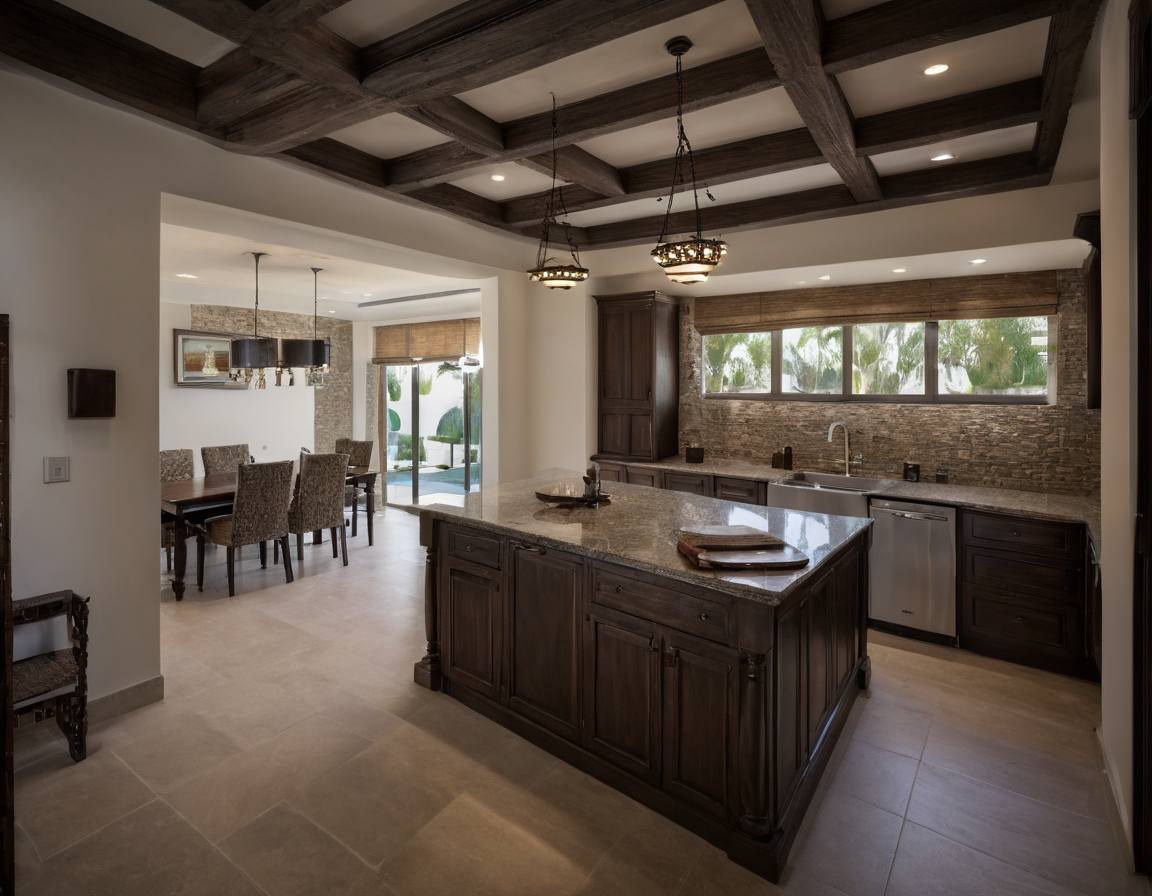
Which contract and fit-out controls protect a Dubai villa owner during renovation shown as an editorial reference for proportion and finish coordination.
- Demolition and enabling works: walls, floors, ceilings, protection, temporary services, debris removal and reinstatement.
- Civil and wet works: blockwork, screeds, waterproofing, tiling, stone, external paving, boundary items and drainage connections.
- MEP and HVAC: electrical points, load changes, plumbing routes, sanitaryware, AC ducting, controls, testing and commissioning.
- Joinery and finishes: shop drawings, veneers, hardware, paint systems, marble slabs, tile codes, grout colours and approved samples.
- Exclusions and assumptions: authority fees, deposits, specialist testing, appliance supply, landscaping, loose furniture, pest control, storage, night work and escalation for long-lead imports.
Custom finishes need tighter paperwork because “similar” materials rarely look similar after installation. Owners planning highly personal finishes should align bespoke home planning with priced specifications before the contractor orders stone, tiles, sanitaryware or joinery boards. For indoor material selection, the U.S. Environmental Protection Agency identifies paints, varnishes, waxes, cleaning products, building materials and furnishings as common indoor sources of volatile organic compounds, so finish schedules should also record low-odour or low-emission preferences where indoor air quality is a priority: EPA guidance on VOC sources.
How should variation orders be controlled during a villa renovation?
Variation orders should be written, priced and approved before the contractor starts the changed work. Verbal instructions are a common dispute trigger because the owner may think the change is minor while the contractor treats it as extra labour, extra material and extra programme time.
- Description: state the changed item, location and reason.
- Reference: attach marked-up drawings, site photos, sample approvals or revised shop drawings.
- Cost: separate labour, materials, subcontractors, overheads, profit and taxes where applicable.
- Programme effect: confirm whether the change affects milestones, access dates or handover.
- Approval: include owner signature, contractor signature and date before procurement or installation.
Common villa variations include hidden pipe replacement, extra waterproofing after demolition, upgraded marble thickness, revised lighting circuits, additional AC grilles, joinery hardware changes and imported material substitutions. A contract should say that unapproved variations are not payable unless the owner later accepts them in writing.
What should be included in the final handover pack for a renovated Dubai villa?
The final handover pack should prove what was installed, what was tested and who remains responsible after the contractor leaves. The owner should make final payment conditional on practical completion, snag closure and delivery of the agreed documents.
- As-built architectural, MEP, lighting, drainage and joinery drawings.
- Authority, developer or community completion documents where the approval route required them.
- Testing and commissioning records for waterproofing, electrical works, plumbing, pumps, HVAC and controls.
- Warranty certificates for waterproofing, MEP equipment, appliances, joinery hardware and installed finishes.
- Operation and maintenance manuals, paint codes, stone schedules, tile references and equipment data sheets.
- Snag list closure evidence with dated photos and owner sign-off.
These controls protect the renovation after mobilisation, but the next risk sits earlier: the site conditions and community rules that can disrupt the project before work begins.
What are the main renovation risks for Dubai villa owners before work begins?
The main pre-start risks for Dubai villa owners are unapproved scope, weak contractor licensing, incomplete drawings, hidden structural or MEP conditions, unclear variation pricing, community rule breaches and missing handover obligations. These risks increase in older villas, heavily modified homes, rented properties, phased renovations and projects with imported bespoke materials.
Which site surveys should happen before a Dubai villa renovation quotation is finalised?
A villa renovation quotation should not rely only on concept layouts, mood boards or a room-by-room finish schedule. The contractor or consultant should price against a measured survey, existing condition photographs, marked-up demolition scope, MEP inspection notes and any authority or community constraints that affect access, working hours or sequencing.
Older Dubai villas need closer technical checks before the price is frozen. Request a roof and waterproofing inspection, plumbing and drainage review, electrical load assessment, HVAC capacity check, pool plant inspection where a pool is affected, and a structural review before removing walls, cutting slabs, changing staircases or adding heavy stone, joinery or façade elements.
Hidden conditions should change the quotation before mobilisation, not after demolition. If inspection finds corroded pipework, undersized AC ducts, overloaded distribution boards, poor waterproofing falls or undocumented structural changes, the contractor should revise the scope, programme and provisional sums. Destructive investigation may be sensible where old bathrooms, kitchens, roofs or external terraces show leakage, cracking or repeated repair history.
Accessibility should also sit in the survey, not as an afterthought. Dubai Municipality provides accessibility resources including a Dubai Building Code accessibility guide and an accessibility guideline for villas through its Dubai Universal Design Code materials, which is relevant where a renovation changes entrances, bathrooms, circulation, ramps or family spaces for people of determination.
Indoor air quality belongs in the same pre-start review. Where paints, adhesives, sealants, joinery finishes or cleaning products will be used indoors, the U.S. Environmental Protection Agency recommends increasing ventilation during use of products that emit volatile organic compounds, so the programme should allow curing, flushing and safe reoccupation periods where needed.
Which community rules can stop or slow a Dubai villa renovation?
Community rules can block mobilisation even when the owner and contractor have signed the contract. Many Dubai villa communities require alteration approval, contractor registration, worker access passes, permitted delivery slots, skip or debris approval, neighbour protection measures, security deposits and compliance with site working-hour restrictions before guards allow daily access.
Operational restrictions often affect cost and duration. A contractor may need smaller delivery vehicles, off-site material storage, manual handling for restricted access, temporary floor and lift protection where applicable, approved waste removal and daily housekeeping. Noisy works, concrete cutting, external scaffolding, boundary works and façade changes usually need closer coordination because they affect neighbours and community appearance.
Rented villas add another approval layer. A tenant should obtain written landlord consent before appointing a contractor, paying deposits or submitting alteration requests, and the consent should state what can remain at move-out and what must be reinstated. Without that written position, a well-executed renovation can still become a tenancy dispute.
The practical decision is simple: freeze the scope only after surveys, landlord or owner consent, authority route, community rules, contractor documents and handover obligations are checked in one pre-start file. That file turns a villa renovation from a hopeful start date into a controlled mobilisation decision.
FAQ
How long does it take to get approval for a Dubai villa renovation?
Approval timing depends on the authority, community, scope and quality of drawings. Cosmetic community access may move faster than structural, façade, pool, MEP or life-safety changes. For DDA-controlled developments, DDA states that its Building Modification Permit has an estimated delivery time of 2 working days for the online service, but that timing applies only to that DDA service and only where the submission is complete.
How much does it cost to renovate a villa in Dubai before approvals and fit-out work are included?
Pre-start cost depends on the work type. Owners should budget separately for surveys, consultant drawings, engineering reviews, authority fees, community deposits, insurance, temporary protection, waste arrangements and specialist testing before comparing contractor fit-out prices. A low fit-out quotation can become expensive if approvals, access permits, hidden conditions and handover documents are excluded.
How does a homeowner get Dubai Municipality approval for a villa renovation?
The homeowner should appoint the correct consultant or contractor for the scope, prepare existing and proposed drawings, identify whether the work falls under Dubai Municipality jurisdiction, submit through the required route and keep completion requirements in the project file. Dubai Municipality’s Building Permit Procedures cover Building Permits and Completion Certificates for residential villas, so the approval plan should cover both permission to start and close-out evidence.
Does every Dubai villa renovation need a contractor with a building contracting licence?
No. A small non-structural finishes package may be handled by an appropriately licensed maintenance, fit-out or interior decoration contractor, subject to community rules. A building contracting activity becomes relevant where the scope includes structural changes, extensions, walls, slabs, boundary works or authority building-permit responsibility. The licence must match the real scope, not the sales description.
What documents should a Dubai villa owner receive at renovation handover?
The owner should receive as-built drawings, approval and completion documents where applicable, testing and commissioning records, warranties, equipment manuals, paint and finish references, snag closure evidence and subcontractor warranty details. Final payment should remain linked to document delivery as well as visible completion.
For help ranking in Google across the UAE, SEO Plus Dubai handles SEO, content, and digital PR.